A friend invited me to the zoo the other day. We were out for a beer, talking about everything under the sun the way you do, and he mentioned he was taking his children on the weekend and did I want to come along. I told him no. He looked at me sideways, the way people do when they think you have said something mildly eccentric.
I did not have an explanation ready. I just knew I did not want to go. It was only when I got home that I started working out why, and what I arrived at was bigger than the zoo. I do not like zoos. I do not like bullfights, fox hunts, rodeos, circuses, marine water parks, or any spectacle built around making an animal suffer so a crowd can feel something. The discomfort I felt about my friend’s invitation is the same discomfort I feel about all of them. But where does that discomfort come from, and why do so many people feel none of it?
The Structure Was Always the Point
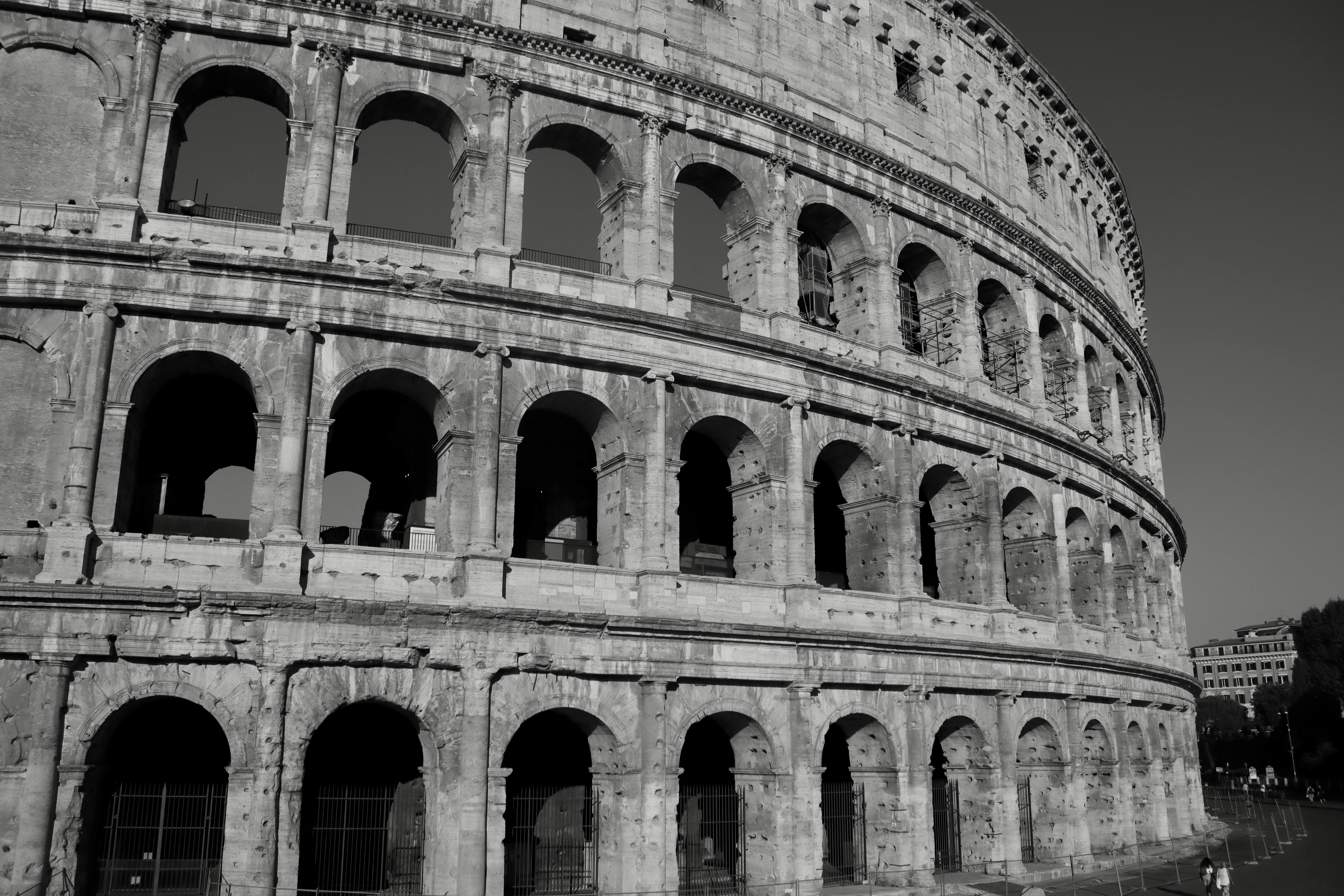
Consider the Colosseum. Emperor Vespasian began its construction around AD 70 to 72, financed in large part from the spoils seized after the Roman siege of Jerusalem. Jewish prisoners provided most of the manual labor. The structure that rose from that site could seat up to 50,000 spectators and stood four stories high. When Vespasian’s son Titus dedicated it in AD 80, he announced 100 days of games. Over 9,000 wild animals were killed during the inauguration alone. I can only imagine that the entire ecosystem in the region, perhaps wherever Rome had invaded, was destroyed by the sudden decline in animal populations.
The Colosseum was not a spontaneous expression of popular entertainment. It was a calculated political instrument. Art historian Nathan T. Elkins has described it as a “monument to dynasty and death.” Scholars have noted that it did more than entertain—it segregated spectators by social class, with the nobility occupying the lower tiers, closer to a ringside view of the carnage, and the poor pushed to the upper galleries, and created what researchers have called a manufactured solidarity among the crowd. The execution of criminals, early Christians, and non-citizens took place at midday. The “respectable” classes typically left to take lunch during that portion, then returned for the gladiatorial bouts in the afternoon. Even the brutality had a schedule and a social code.
What strikes me most is how transparently political the whole institution was. Building a structure of that size specifically to stage mass killing was, as historian Greg Woolf has put it, a “sign of wealth from the Emperors.” The violence was not incidental to its purpose. The violence and savagery was the purpose. And the crowd’s appetite for it was not a natural human instinct that the emperors were merely accommodating. It was an appetite the institution actively cultivated and maintained, because a crowd watching people and animals die in the arena was not organizing against the people who owned them. They were not looking at how fat the noble class was while they starved.
That logic has never really left us. The technology has changed. The scale has changed. The politics of distraction, the calculated spectacle of violence offered to the public as a substitute for actual agency — that has not changed at all. Some of it looks the same — bullfights, rodeos, while others are hidden behind 24-hour news cycles, sports, and social media.
The Bull, the Crowd, and My Friend
That same evening at the bar, one of my friends — a white guy, affable, intelligent by most measures — started talking about a bullfight he had attended. He described a part of the ritual where a man jumps onto the bull’s face to distract it while others hold it down, tiring the animal for the crowd’s amusement, before it gets led out the back to be slaughtered where no one has to watch. The guy doing the jumping did not time his leap correctly and ended up impaled on one of the horns. He died.
My friend told me this without detectable horror. He told me he could not wait for his next bullfight.
I said nothing, but I thought: I cannot understand the state of mind that processes watching a stranger die a pointless and brutal death and arrives at entertainment. I would hate to die to make a crowd feel sufficiently occupied for an afternoon. The least I can extend to another person is the same courtesy.
What my friend’s reaction revealed — and I do not say this to attack him specifically, because this reaction is common, which is the problem — is a capacity to strip another person of their full humanity at the moment it becomes inconvenient to acknowledge it. The man in the ring stopped being a man with a family, debts, an avid swimmer, beer-drinking with his friends, and a Tuesday morning routine, and became a prop in a spectacle. When the prop malfunctioned fatally, the machinery of entertainment simply filed it under “memorable.”
What the Research Says About Why People Enjoy This
The psychological literature has a name for the pleasure people take in observing suffering: schadenfreude. Leon Festinger’s social comparison theory, developed in the 1950s, provides part of the foundation for understanding it — we evaluate our own position in the world by comparing ourselves to others, and another person’s misfortune can make us feel relatively elevated. Research by van Dijk and colleagues has established that schadenfreude is driven by three primary forces: aggression, rivalry, and a desire for what feels like justice. The aggression-based variant is especially relevant here. It operates through group identity: observers derive pleasure from the suffering of those they perceive as outside their group because it confirms and elevates their own group’s status.
What makes spectacle cruelty distinct from ordinary schadenfreude is the role of power. Psychology Today, citing work on the so-called “Dark Tetrad” of personality traits — narcissism, Machiavellianism, psychopathy, and sadism — notes that the enjoyment of others’ suffering becomes most persistent and most dangerous when it is tied to a need to establish dominance. The psychological literature distinguishes between what Theodore Millon called “spineless sadism” and “tyrannical sadism.” The spineless variety is particularly revealing: these individuals act cruelly as a counterphobic response to their own insecurity, selecting targets that cannot fight back in order to experience a form of courage they do not otherwise feel. The target’s powerlessness is not incidental to the pleasure. It is the source of it.
Research published in peer-reviewed journals has found that low self-esteem is one of the most reliable predictors differentiating animal-directed aggression from other antisocial behaviors. A 2013 study by Kavanagh, Signal, and Taylor found that individuals who score higher on Dark Tetrad measures show significantly higher rates of animal cruelty, with psychopathy driving the relationship most strongly. The University of British Columbia research team that contributed to this work made the case that everyday sadism — not the clinical extreme, but the ordinary enjoyment of cruelty — deserves to be treated as a distinct personality trait in its own right.
What does all of that add up to? The person who needs the bull to be exhausted before they walk away satisfied, the person who cheers when the lion is cornered, the person who takes the children to watch exotic animals pace in concrete enclosures — they are not simply having fun. They are resolving something. They are filling a deficit in their own sense of power, their own certainty about where they sit in the hierarchy of things. The spectacle is medication for a wound they have never named.
The Family Outing
I want to be transparent about something, because intellectual honesty matters more than a good story: I had heard that the word “picnic” derives from “pick a nigger,” the supposed origin being that white Americans would gather to select a Black person to lynch and call the occasion by that name. I believed it for years. It is not true. The word “picnic” is French — pique-nique — dating to a satirical poem from 1649 in Paris, long before the United States existed as a nation. The Oxford English Dictionary confirms this. Snopes has fact-checked it as false. I correct myself here because I think honesty about what we know and what we have been told, even within communities that have every reason to be angry, is one of the few tools we have that the system cannot easily take from us.
What is historically documented and unambiguous, however, is this: white Americans did attend lynchings as family entertainment. They brought their wives and their children. They dressed in their Sunday clothes. Local newspapers in the South would announce a scheduled lynching in advance so people could plan to attend. The Equal Justice Initiative, after years of research, has documented nearly 6,500 confirmed racial terror lynchings between 1865 and 1950. The Tuskegee Institute recorded 4,743 lynchings between 1882 and 1968 alone. They took photographs as reminders of this grand old time. Photographs survive of these occasions — crowds grinning, children lifted onto shoulders for a better view. Body parts were taken home as souvenirs: fingers, toes, sections of charred flesh. I often wondered if some of them ate the pieces they collected. There are documented cases of pieces being mailed to people who could not attend, as you would send a postcard from a vacation. A society that can do that, and call it a weekend fun day, is not dealing in aberrant behavior. It is dealing in a fully developed culture of spectacle cruelty — state-sanctioned, church-approved, and family-attended.
And the pattern did not end when it became illegal. A civil rights organization called JULIAN released a report in early 2026, titled A Crimson Record — a direct descendant of Ida B. Wells’ 1895 A Red Record — documenting more than 70 suspected modern-day lynchings across seven Southern states between 2000 and 2025 – LAST YEAR at the writing of this article. Mississippi alone accounts for 20 confirmed or suspected cases. The methodology has simply been updated. The rope is still used. The body is still displayed — usually found hanging from a tree in a location the victim had no reason to be. Likely, images of this spectacle are being shared among the people who like and do these things. Like selfies, how else would they show their dominance without visual evidence?
What has changed is the paperwork: these deaths are almost universally ruled suicides by local, often white-controlled authorities, the investigation is closed within days, and the family is left to contest a finding with no resources and no political will behind them.
Jermaine Carter, found hanging from a tree in Greenwood, Mississippi in 2010. Lennon Lacy, 17 years old, found hanging from a swing set in North Carolina in 2014. Robert Fuller, 24 years old, found hanging from a tree in Palmdale, California in 2020. Javion Magee, 21 years old, found with a rope around his neck near a truck delivery stop in North Carolina in 2024. Trevontae Shubert-Helton, 29 years old, found hanging from a tree in a town that was 90 percent white in Georgia in 2024.
In nearly every case, the official verdict is suicide. In nearly every case, the family says it is impossible. In nearly every case, no one is charged. As JULIAN founder Jill Collen Jefferson put it: “Lynching didn’t stop — it adapted. If we don’t investigate these deaths with the possibility of homicide in mind, we may never know what really happened.” What has changed is not the act. What has changed is how much effort the system now puts into making sure no one has to look at it.
The Most Exotic Pet
During the height of colonial rule — and I use “the height” loosely, because it is still ongoing, just under a different set of branding decisions; the word is now imperialism — European families would walk black children around on leashes. Not metaphorically. Literally, as you would walk a dog through a neighborhood, to demonstrate to their peers that they had acquired the most exotic specimen available. The child was not understood as a child. It was understood as a possession with an interesting shape, something between a curiosity and a status symbol.
People criticized this. Not everyone found it acceptable. But many people also loved the idea. The more exotic the display, the more capital it conferred. And the psychological structure of it was identical to the structure of the zoo: a living thing, reduced to spectacle, existing to confirm the spectator’s sense of their own importance.
I think about this whenever someone tells me how wonderful it is to have a dog and suggests I should get one. The dog is loved, I understand that. The dog genuinely loves its owner back. But I cannot help noticing the long historical thread connecting the leashed child in the colonial street to everything else we have built around the performance of dominion over living things.
Where My Ancestors Come From
Africa is the second-largest continent by area, after Asia, and the richest in terms of the natural resources that keep the global economy functional — the minerals, the metals, the rare earths that make electronics, military technology, and clean energy possible. It is also the continent from which all human life originated. And it is the continent from which my ancestors were taken.
Not persuaded to leave. Not recruited. Taken. People going about the business of civilizations that had been functioning for thousands of years were packed into the holds of wooden ships and transported to the Americas to grow cotton, sugar, and tobacco. Cotton for clothes so other people could feel respectable in public. Sugar to sweeten teas that tasted bad without it. Tobacco to settle the nerves of people whose lives were, at their core, distressful enough to require chemical sedation.
Add Christianity to manage the interior life of the enslaved and soften the edges of their resistance, and you have a system of extraordinary efficiency: cheap raw materials, controlled labor, an ideology of divine sanction, and a consuming class too distracted by comfort goods and the management of appearances to examine the structure beneath their feet.
My ancestor was not a resource. They were a person. The system required that this fact be treated as irrelevant, and so a great deal of cultural, religious, and legal machinery was built to sustain that irrelevance. You can draw a direct line from that machinery to the legal attorney in Georgia who showed me a photo of his son shooting a turtle with an AR rifle.
The Turtle, the Fish, the Rifle, and the Father
A lawyer I know showed me this photo with visible pride. The turtle had entered the family’s pond and was eating their fish. The son took an AR rifle and shot it. He did not eat the turtle. He threw it in a ditch. The father was proud because the boy had handled the rifle well.
I sat with that for a moment. The turtle had done what turtles do — it found food. It had no concept of property rights or pond ownership. It certainly had no concept that the land surrounding that pond was itself acquired through the displacement of Indigenous Americans who had maintained it for centuries without requiring turtle executions.
The turtle was shot not for food, not for any practical purpose, but for the dopamine of exerting power over something that had no capacity to defend itself against a semi-automatic weapon. And the father experienced the event as evidence that he had raised his son correctly.
I looked at that man and realized I needed to leave as soon as was socially manageable. Not because I thought he was uniquely monstrous. But because I recognized the psychology. The pleasure is in the elimination of something that cannot fight back. The pleasure is precisely in the unfairness of the odds. And a person who needs that feeling regularly, who chases it, who teaches their children to chase it — that person is not sated by turtles. The target is whatever is available and whatever is sufficiently powerless.
What Conspiracy Theories Have in Common With All of This
My friend made an observation that night about conspiracy theorists, specifically a mutual acquaintance who believed the earth was flat despite having personally crossed the Atlantic on a plane. My friend’s theory was that people want three things out of life: to reproduce, to accumulate money and power. Conspiracy theories, he argued, deliver none of those. He could not understand why anyone would invest themselves in them.
I disagreed with his framing. Conspiracy theories offer the perception of survival. The believer, just as a believer in Christianity, thinks: I know something that the majority does not know. When the catastrophe comes that will confirm my belief, I will be alive and they will not be. The conspiracy is not irrational. It is a bid for a kind of dominance — epistemic supremacy — in a world where the believer feels chronically underestimated, insufficiently seen, unable to access the money or power my friend identified as primary motivations. The theory converts impotence into special knowledge. The conspiracy theorist is not stupid. They are insecure in a specific and identifiable way.
Which puts them in the same psychological territory as the spectacle-chaser, the trophy hunter, and the European woman who walked her enslaved child down a colonial street on a leash. All of these behaviors are solving the same problem: a deficit of internal security, a persistent doubt about one’s standing among other humans, addressed through the visible demonstration of power over something that cannot push back.
The Uneven Odds
I want to be clear about what I object to and what I do not. Boxing, wrestling, contact sports between consenting adults — I find them brutal, but I can work with them morally. The participants make a choice. The risks are, with some variation, understood by both parties. The odds, while never truly equal, are at least structurally comparable.
A fox on a hunt in rural England does not have the option to bring a weapon. An elephant on the Serengeti does not get to study the tracker’s technique in advance. A lion does not get to bring backup. The power differential is so extreme that the outcome is almost never in question. The only genuine uncertainty is which animal dies first and how. If you genuinely need the lion’s status or the elephant’s tusk, I would suggest acquiring it barehanded, at the terms the lion or elephant can actually meet. If you will not do that, you already know that what you are seeking is not the thing. What you are seeking is the certainty of the outcome. The predetermined win. The performance of dominance without any actual contest.
That is not hunting. That is not sport. That is the Colosseum with better equipment and a longer drive.
The Through-Line
Every structure I have described operates on the same mechanism: the reduction of a living thing to a function, to a resource, to a prop, to a target — so that someone else can feel something they cannot feel on their own. The gladiator, the bull, the enslaved person, the turtle, the lynched person, the conspiracy theory’s imagined enemy. All of them exist in these systems not as subjects with their own interior lives, their own stake in continuing, their own relationships and daily routines, but as objects in someone else’s performance of superiority.
This is how soldiers are trained to kill. Not by teaching them tactics first, but by teaching them first that the people they will kill are not quite human, are evil without explanation, are a threat to the deity or the democracy or the civilization (especially, so-called, white civilization) — whatever word sits in the slot that week. The specific rationale changes. The mechanism is constant. You make the target less than human, and then the harm you do to it becomes a kind of achievement.
I grew up in the Caribbean. My ancestors built that civilization under conditions engineered to prevent them from building it, and they built it anyway. I know exactly what it costs when you are the thing in the enclosure, the thing in the hold, the thing in someone else’s ring. I would not wish that position on an animal. I would not wish it on a turtle.
The next time someone tells you they cannot wait for their next bullfight, pay attention to how they talk about everything else they feel entitled to. It is the same conversation.
Read more about economic racism in my book. Get it on Amazon books here.