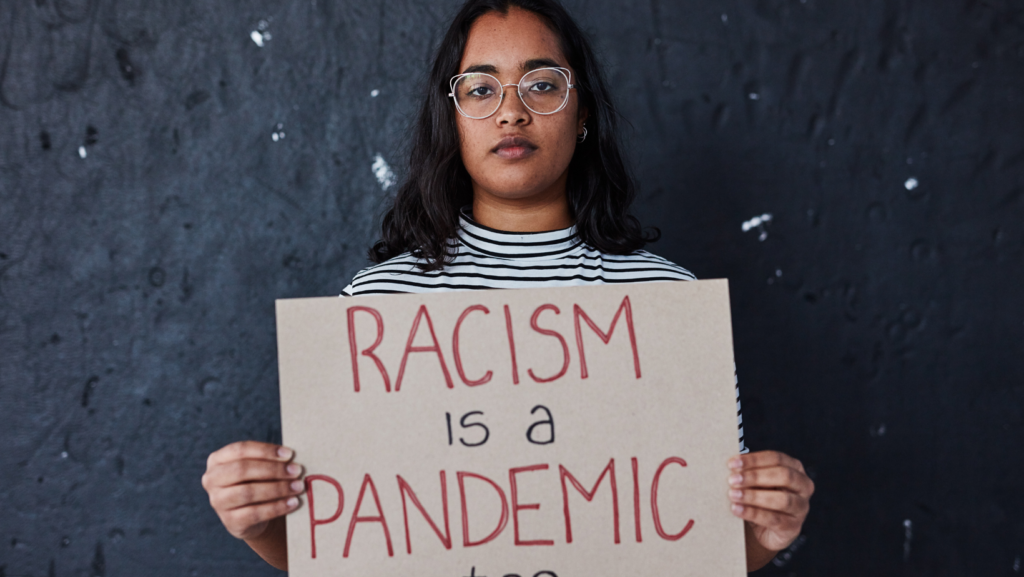
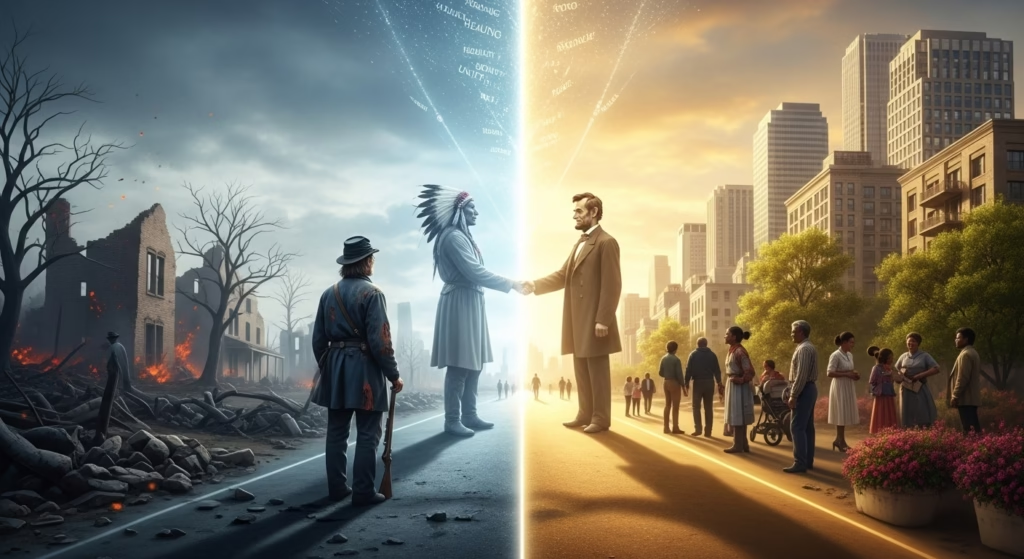
I have spent a lifetime studying the architecture of human suffering, economic racism, poor policy decisions, and the signs of these failures: the deliberate designs of racism, patriarchy, and economic exploitation that privilege a few at the expense of the many. The work is often a dissection of pathology. But the other night, I dreamed a different chronicle. I did not dream of revolution with barricades and banners, nothing so colorful. I dreamt of a national fever breaking after centuries of bad sleep. I dreamed America finally grew up. The country matured. In the dream, we referred to our new reality as the Humane Commonwealth.
It wasn’t a slogan on a hat or signs pretending we were once a great society for all; it was a checklist we, as a nation, finally finished. It took years and determination. It was the logical, if breathtaking, outcome of eliminating the selfish humans and their destructive forces. It made obsolete the forced religions (with their false promises for their selected few), racism (with its false promises for a chosen few), gender bias, genocide, and land stealing. These were all the failures in humanity due to strange beliefs and ideologies (with false promises…) that do not benefit everyone. Our new core tenet was simple: every belief must not harm any human, culture, plant, animal, or the planet.
The Foundation of this New House? Dismantling the Culture of Violence
The most profound change was the silence. Even the war cry of the national anthem was replaced to fit the new norm of a peaceful, calmer society. The constant, low-frequency hum of anxiety that once defined American life, the background radiation of impending violence, was gone. This was because we had eradicated the market for bullets. There were no civilians with rounds, no ritual exceptions for an outdated rule. There was a national buyback of retired metals for homes, public art, and infrastructure. Police and all law enforcement shed their battlefield gear and split into two operational branches: guardians and responders. Their training was on maintaining societal peace and protecting all humans, not on inciting violence. Unarmed first-contact teams handled ninety-nine percent of calls. The last mass shooting entered the archive like an old disease report. Children learned about it the way we learn about smallpox or rickets. No one missed it. This dismantling of violent power structures created the foundational stability upon which everything else was built.
The Right to Home and Purpose
Homelessness ended because we stopped pretending tents could compete with deeds. We turned housing into a public utility, as essential as water and power. A simple law stated that if a unit sat vacant for speculation, the public could lease it to someone sleeping outside at a regulated rate. The right to shelter became the right to a mailing address, a door, and a lock.
The illegal drug trade vanished over time. The need for narcotic drug addictions to numb reality was no longer necessary, because reality was so much better than a high. Drug violence is unnecessary because so many fewer people need to escape American society through addiction. Those few who remained addicted were treated and helped back into a productive life with a home, medical treatment, and connection to family and friends.
Concurrently, joblessness faded because we stopped hoarding the means of production. When a firm took public subsidy, it granted workers a growing ownership slice every year. A universal dividend from automation paid every citizen a capital income, seeded at birth. We still worked, but people produced for themselves and their communities, instead of for a hoarding few. The very word “underclass” retired from the language—no need to identify people by class structure anymore.
Truth, Reconciliation, and Equitable Restoration
America had a horrible past that continued into the 2020s. It took a major, destructive, authoritarian regime and many people dying and suffering for the country to take this turn. We could not move forward without confronting our past. A permanent Truth, Redress, and Reconciliation Commission convened with subpoena authority and restorative aims. It was a national ledger and a workshop.
The land stolen was remapped for fair distribution. Wealth extracted was counted, and the rewards were also evenly distributed. A Reparative Trust bought down racialized debt, funded land-back compacts with Native nations, and capitalized historically dispossessed communities with patient public equity. The process was not punitive. We didn’t confiscate. There was no violence. We compensated, returned, and learned to co-manage. We know now that there are enough resources for everyone, once a few do not hoard. For the first time in centuries, the economy could breathe. We experienced real equilibrium.
Education as a Gateway, Not a Gatekeeper
The gates of schools, colleges, and universities came off their hinges because now everyone who qualified on merit was welcomed. No student loans, pregnancy, any juvenile delinquency, or debt hindered their access to education. A universal seat guarantee ended the cruel lotteries of birth and ZIP code that decided people’s fate. Tuition became a historic footnote; debt peonage followed it out the door. Faculty hiring finally mirrored the country’s demographics; research money chased human problems instead of institutional rankings. Professors and all professionals were better prepared for the workforce by a society that valued cultural understanding and respect. Community colleges thrived as invention hubs; apprenticeships sat at the same table as PhDs. Non-PhD investors were also welcomed and respected for their contributions.
A New Foreign Policy: Partnership, Not Predation and Plunder
Our internal transformation fundamentally reshaped our role in the world. Foreign policy became a standing promise: do no extraction. No more overthrowing foreign governments, missionary invasions, unwelcome, and strings-attached technical assistance, coups for commodities, no more bombs for oil, no more debt traps dressed up as aid for the poor. We wrote a Fair Dealing Charter that prices imports of raw materials and intermediate materials according to their real human and environmental costs, ensuring living wages in global supply chains. Poverty rates in these countries plummeted as people got fair rewards for their labor, and in a way that protected their environment and culture.
This was not about teaching “our” way. It was about building relationships based on mutual respect. We moved away from a paradigm of cultural superiority to one of humble exchange. The State Department was rebuilt around cultural immersion and diplomatic collaboration with all countries, not intelligence gathering for economic advantage and power grabs for a few rich oligarchs. We became students of the world. We shared. We didn’t see ourselves as the world’s police, or instructors, imposing our way of life on everyone else at the point of a gun, or the threat of one.
Museums as Bridges of Understanding
This new ethos revolutionized our cultural institutions. Museums were transformed from temples that displayed “foreign” and “exotic” artifacts behind glass into dynamic bridges of understanding. Exhibits on ancient Egypt, the Mali Empire, the Mughal Dynasty, or Indigenous Americas were no longer presented as strange and distant curiosities. They were also replicas, as the originals were returned to their place of origin. Similarly, we shared replicas of our history with the world to show them how far we have come to maturity. Non-American artifacts showcased as essential chapters in the shared story of an enriched Earth, to be respected and learned from. We improved in many ways from our understanding of ancient civilizations.
We eradicated the ignorant and microaggressive comments born of geographic and cultural illiteracy. Americans now learned world geography and cultural history with the same importance as they know their country they live in. The concept of the superiority of one human or culture over another has become socially obsolete and is deeply frowned upon. Such behavior patterns were seen as barbaric and a relic of the dark past of a less civilized, not yet mentally or socially mature people. This wasn’t enforced by law, but by a collective societal maturity that recognized diversity as a strength and ignorance and discrimination as a weakness.
The Results were Planetary Health and Collective Well-being
The outcomes were profound. Internally, the mental health of the nation improved because the daily madness had receded. With the oppressive weight of precarity and violence lifted, minds stopped fraying. Externally, our commitment to ecological sanity made us a leader in the climate crisis. Public policy, no longer captive to fossil fuel interests, aggressively funded a global transition to renewable energy. Just breathing cleaner air helped us feel better, healthier, and live longer.
The result was a world that began to trust us and even emulate us. Other nations, seeing the tangible benefits of peace and equity, began to adopt similar models. They did this by following our example. They requested our help, not us forcing our society on them. The Humane Commonwealth of America exported methods, technology, ideas, intellectual properties, patents, not armies, spies, military drones and fighter jets, economic policy hitmen, or diseases. The global murder rate fell. People felt safe in their communities all over the world. Desperation that leads to crime fell to nothing significant. The climate curve flattened. After a generation, people stopped wanting to move away from America, to escape to a more peaceful Canada or Mexico. They traveled to learn and connect, always eager to return to the peace of home.
The Future of Interconnected Prosperity
Looking forward fifty years, this period is now referred to as “the quiet century.” At the hundred-year mark, we federated globally to manage planetary challenges—carbon, pandemics, data—while devolving power to local communities. Artificial intelligence was constitutionally chartered as a public utility.
Two hundred years in, artificial scarcity finally lost its last alibi. The archives of the Bad Old Days are preserved with care: the lynching trees, pictures of masses of people working to enrich a few while themselves impoverished, the pogrom lists, and the redline maps. We keep them because we understand that forgetting is the parent of repetition.
Our children walk through those rooms and come out blinking, saddened, angry for ten minutes, and grateful for the rest of their lives. They teach their children to avoid the same mistakes. The ultimate measure of our success remains a simple question: Does a stranger, whether from across the street or across the globe, breathe easier when you enter the room? The answer was, yes!
Then I woke up. The morning light was the same. The checklist, however, was still on my desk. The math all adds up. The policies are all feasible. A country is nothing more than a supply chain of decisions. Bad decisions lead to bad outcomes. We know which ones to make. The Humane Commonwealth does not have to be a fiction of the future. It is a mood with statutes. We could do this if we wanted. If we get tired enough. If enough of us die. If we lose the very earth we stand on to this deluge of greed. It is a choice. The blueprint is written. Others have signalled it for centuries. The question is whether we have the will to build it. Are we desperate enough yet for a better world?
Read more on how to implement the policies at MartinKush.com/books